
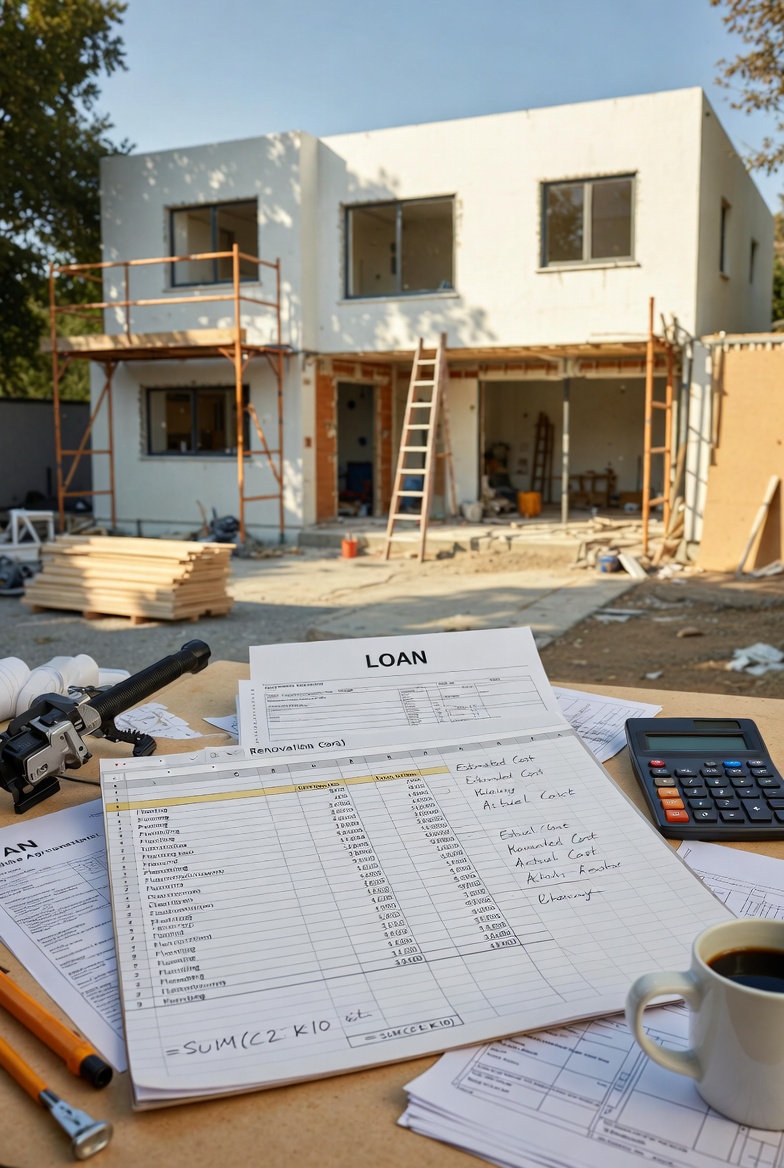
How to budget for home renovations and financing: Integrating budget with loan planning.
3/5/2026
Home renovations can transform your living space, but success depends on smart budgeting combined with strategic financing. Start by defining your project scope and researching realistic costs for materials, labor, permits, and design—then build in a 10-20% contingency fund for surprises. Integrate loan planning early by comparing your total estimated budget against available financing options like home equity loans, HELOCs, renovation-specific loans (such as FHA 203(k)), or personal loans to ensure monthly payments fit comfortably within your overall financial picture.
Here are key tips to effectively integrate your renovation budget with loan planning:
- Research costs thoroughly first — Get multiple contractor quotes and use online cost estimators to create a detailed line-item budget before approaching lenders.
- Include a contingency buffer — Add 10-20% extra to your total budget to cover unexpected issues, preventing the need for additional borrowing mid-project.
- Evaluate equity and cash options — Assess your home equity for lower-interest options like HELOCs or cash-out refinances, which often beat personal loan rates.
- Choose the right loan type early — Match financing (e.g., renovation loans based on post-project home value) to your budget timeline and repayment capacity to avoid overborrowing.
- Track spending in real time — Use apps or spreadsheets to monitor expenses against your planned budget and loan draw schedule, adjusting as needed to stay on track.