
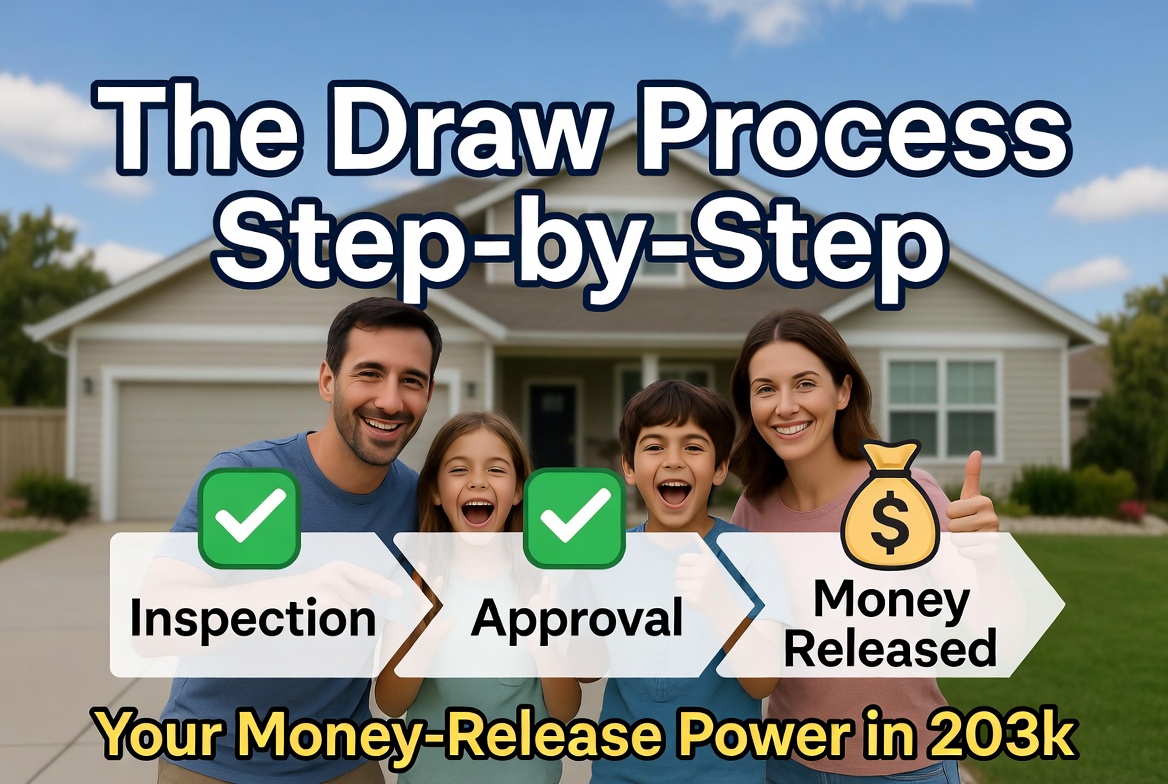
The draw process step-by-step (your money-release power)
5/14/2026
This is one of the most important protections you have as a borrower. Here is exactly how the draw process works.
Step one. The contractor completes a stage of work. This could be demolition. Framing. Rough plumbing and electrical. Drywall. Or finishes.
Step two. The contractor requests an inspection. They contact the HUD consultant and ask them to come out and verify what has been completed.
Step three. The HUD consultant performs the inspection. They look at the work that has been done. They take photos of the completed items. They confirm the percentage of work that is finished according to the approved plans. They do not judge the overall quality. They simply verify what is completed.
Step four. You review and approve the draw. After the consultant’s inspection you get to review everything. Walk the house yourself. Check the work. Take your own photos. If everything looks good and is completed to your standards you sign off and approve the draw. If something is missing or not done right you hold the draw until it is corrected.
Step five. The lender releases the payment. Once you and the consultant both approve the draw the lender sends the money directly to the contractor. Usually within a few business days.
Most projects have four to six draws. The final draw includes any remaining contingency money after everything is 100 percent complete and all lien waivers are received.
This process is your real power. You are not handing over money based on the contractor’s word alone. The HUD consultant verifies what work has actually been completed and you have the final say before any payment is released. If the work is not done or not to your satisfaction you simply do not approve the draw. The money stays safely in escrow.
Pro tip. Always do your own walkthrough before you approve any draw. Take your own photos. Make notes of any issues. And communicate them clearly in writing. This creates a strong paper trail.
The draw process is designed to protect you. It keeps the contractor motivated to finish each stage properly and makes sure your renovation money is only released for work that has actually been completed.
Understanding this process helps you stay in control and confident throughout your 203k renovation.