
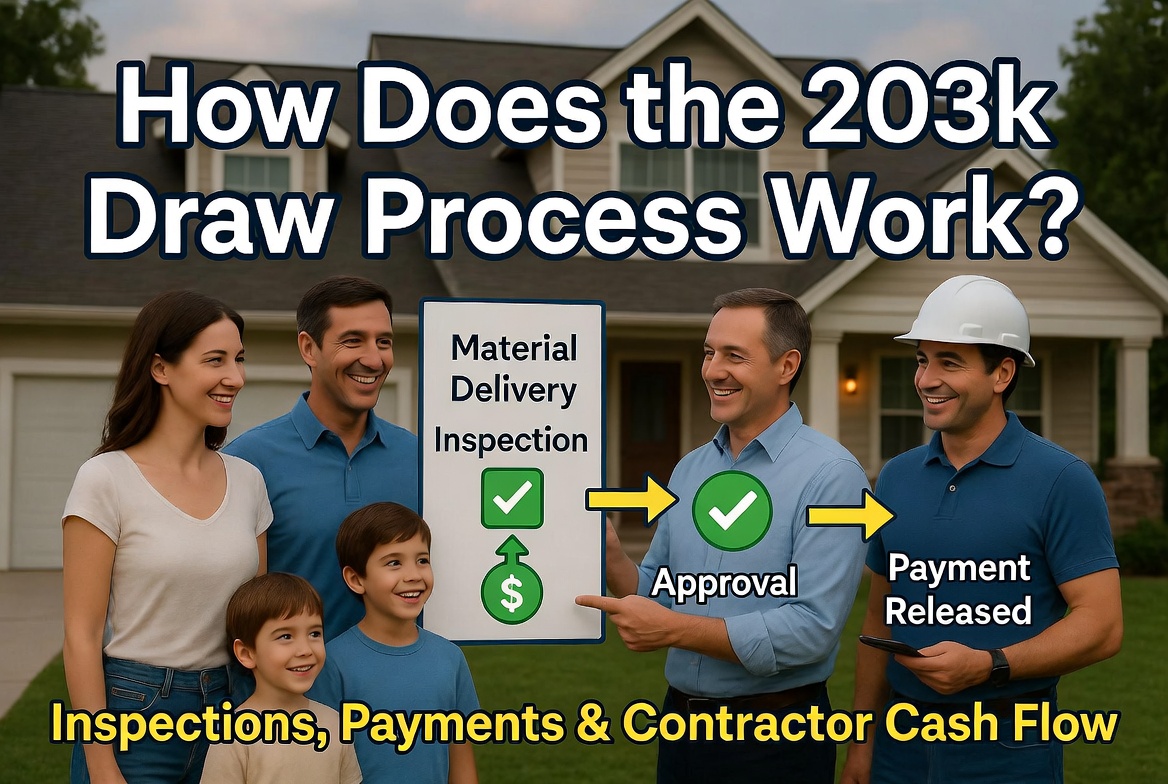
How Does the 203k Draw Process Work? Material draws, inspections, payments, and contractor cash flow.
6/30/2026
How does the 203k draw process actually work? Material draws, inspections, payments, and contractor cash flow.
This is one of the most misunderstood parts of a 203k loan. Here is exactly how it works in simple terms.
The renovation money is held in escrow by the lender. It is not given to you or the contractor all at once. Instead, it is released in draws as work is completed.
Here is the step-by-step process:
- The contractor completes a stage of work (for example: demolition, rough-ins, drywall, or finishes).
- The contractor requests a draw inspection.
- The HUD consultant comes out and verifies what work has actually been completed.
- You do your own walkthrough and approve the draw if you are satisfied.
- The lender releases the payment directly to the contractor.
Material Draws FHA does allow material draws early in the project. Contractors can get paid for materials they have already purchased by submitting invoices. They can also request 50% reimbursement for materials they have ordered. However, every lender has their own rules on material draws. Some are more flexible than others. Always ask your lender on day one what their exact policy is.
Contractors often worry about cash flow on 203k projects because they do not get large upfront deposits like they might on regular jobs. This is why it is so important to explain the draw process clearly to any contractor before they bid. Good contractors who understand 203k will plan their cash flow accordingly and give you more accurate bids.
Most projects have 4 to 6 draws total. The final draw is released only after everything is 100% complete, the final inspection passes, and all lien waivers are received.
Pro tip. Always do your own walkthrough and take photos before you approve any draw. Never approve payment for work you have not personally checked. This is your strongest protection as the borrower.
Understanding the draw process helps you stay in control, keeps contractors motivated, and protects your money every step of the way.