
How Does the 203k After-Repair Appraisal Work? As-is value, future value, and what lenders are looking for.
7/3/2026
How does the 203k After-Repair Appraisal work? As-is value, future value, and what lenders are looking for.
The appraisal on a 203k loan is different from a regular home purchase. It is actually two valuations in one report, and it plays a huge role in how much the lender will finance.
Here is exactly how it works.
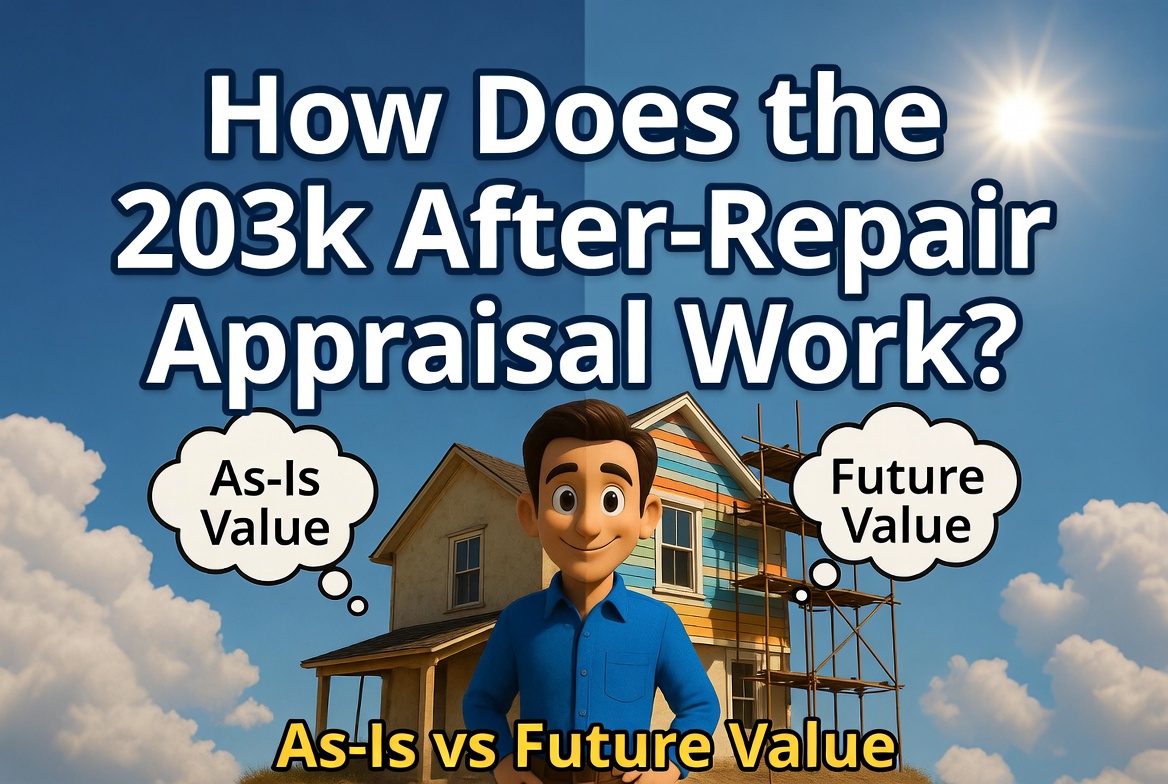
First, the appraiser determines the As-Is Value. This is what the house is currently worth in its present fixer-upper condition. They look at comparable sales of similar homes in the area that also need work. This number helps set a realistic purchase price and shows the lender the current market value.
Second, and most important for a 203k, they calculate the After-Repair Value — also called the future value. The appraiser reviews your renovation plans, the HUD consultant’s work write-up, contractor bids, and photos. They estimate what the house should be worth once all the approved repairs are completed. They compare it to recently sold, updated homes in the neighborhood.
Lenders use both numbers to decide how much they will lend. They will finance the lesser of:
- Your total project cost (purchase price + renovations + fees), or
- 110% of the After-Repair Value.
This 110% rule gives you a small buffer so you are not upside down on the loan after the work is done.
What lenders are really looking for in the appraisal:
- The As-Is Value supports your purchase price.
- The After-Repair Value is strong enough to justify the full loan amount.
- The renovation plan is realistic and adds real value to the home.
Pro tip. Help the appraiser get a strong After-Repair Value. Provide clear renovation plans, a detailed work write-up from the consultant, contractor bids, and even photos of similar finished homes in the area. The better the information they receive, the more accurate (and usually higher) the after-repair value will be.
Understanding the 203k appraisal helps you set the right offer price and plan a renovation that actually builds equity. It is not just a box to check — it is one of the key safeguards that protects both you and the lender.